How local voice cloning works, fine-tuned on your own GPU
Voice cloning doesn't have to mean uploading your voice to a cloud service — here's what fine-tuning a model locally actually involves.
By Agent Software
The usual tradeoff in voice cloning
Cloud voice-cloning services are convenient: upload a sample, get a synthetic voice back. The tradeoff most people don't examine closely is what happens to the sample afterward — it typically trains or informs a model that lives entirely on the vendor's infrastructure, under their retention policy.
What a local pipeline changes
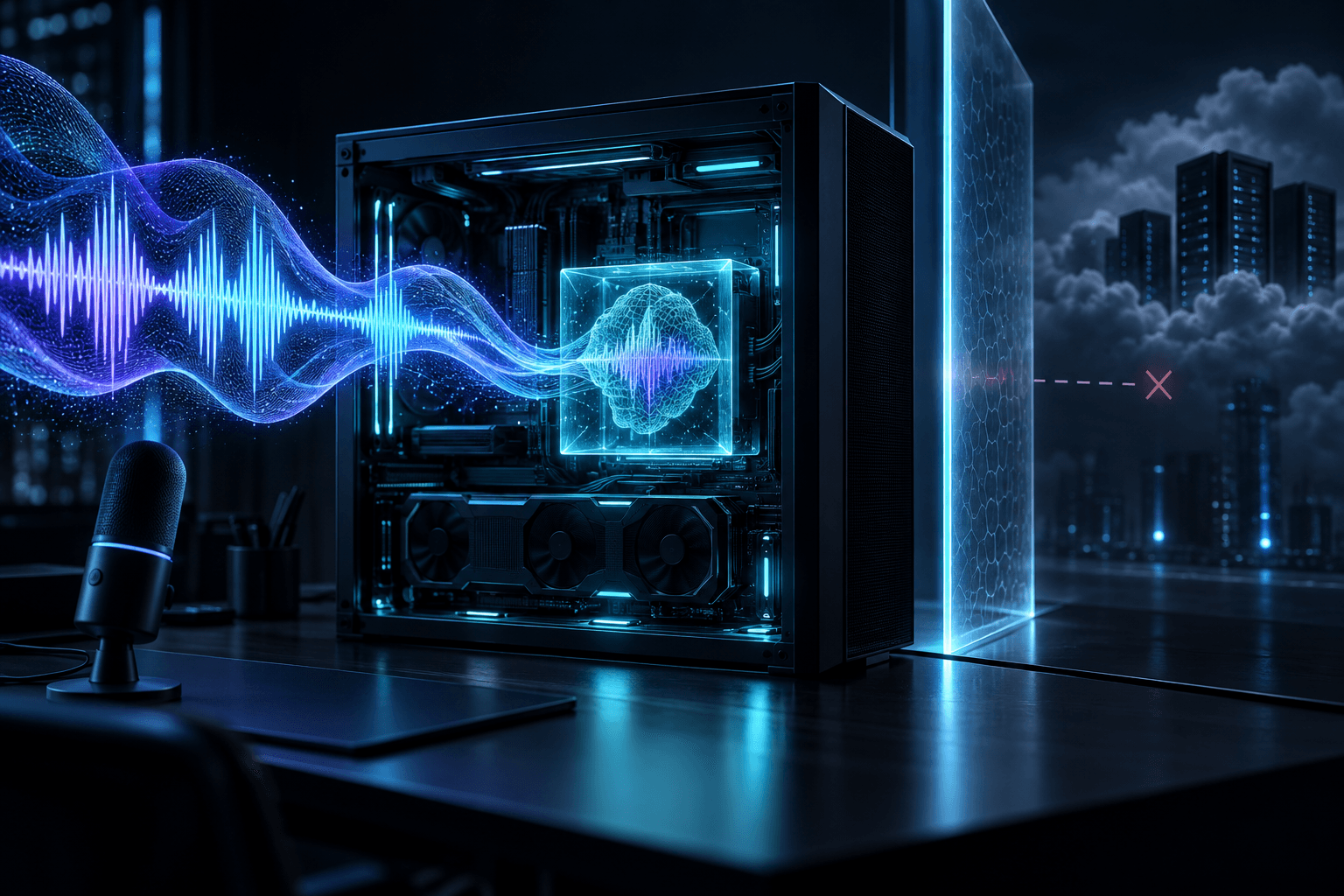
Agent Avatar's approach is to fine-tune a text-to-speech model directly on a local GPU, using your own recordings as training data. The training run and every subsequent generation happen on your machine. Nothing about the process requires sending a voice sample anywhere.
That's a genuine architectural commitment, not a checkbox — it means the product has to work within the constraints of consumer or workstation GPU hardware rather than assuming unlimited cloud compute.
What that costs you
Local fine-tuning isn't free convenience. It requires a capable GPU, meaningfully more setup than a web upload, and the training run itself takes time. The pitch isn't "as easy as the cloud alternative" — it's "your voice model, trained and run entirely on hardware you control."
Where this fits in the suite
Agent Avatar's voice-cloning work is part of a broader local-first video pipeline that also handles lip-sync and face animation, aimed at producing talking-head video content — like product walkthroughs and launch material — without uploading a presenter's likeness to a third-party cloud service.
The honest state of this today
This is an internal project in development, not a shipped, self-serve product. The pipeline exists and is being tested, but there's no live signup flow for cloning your own voice today. This post describes the engineering approach — how it's meant to work — not something you can go use right now.