Why the Agent Software Suite exists: four tools, one local-first workflow
Why Agent Software groups Wispr, Brain, Harness, and Terminal into one local-first workflow instead of shipping disconnected point tools.
By Agent Software
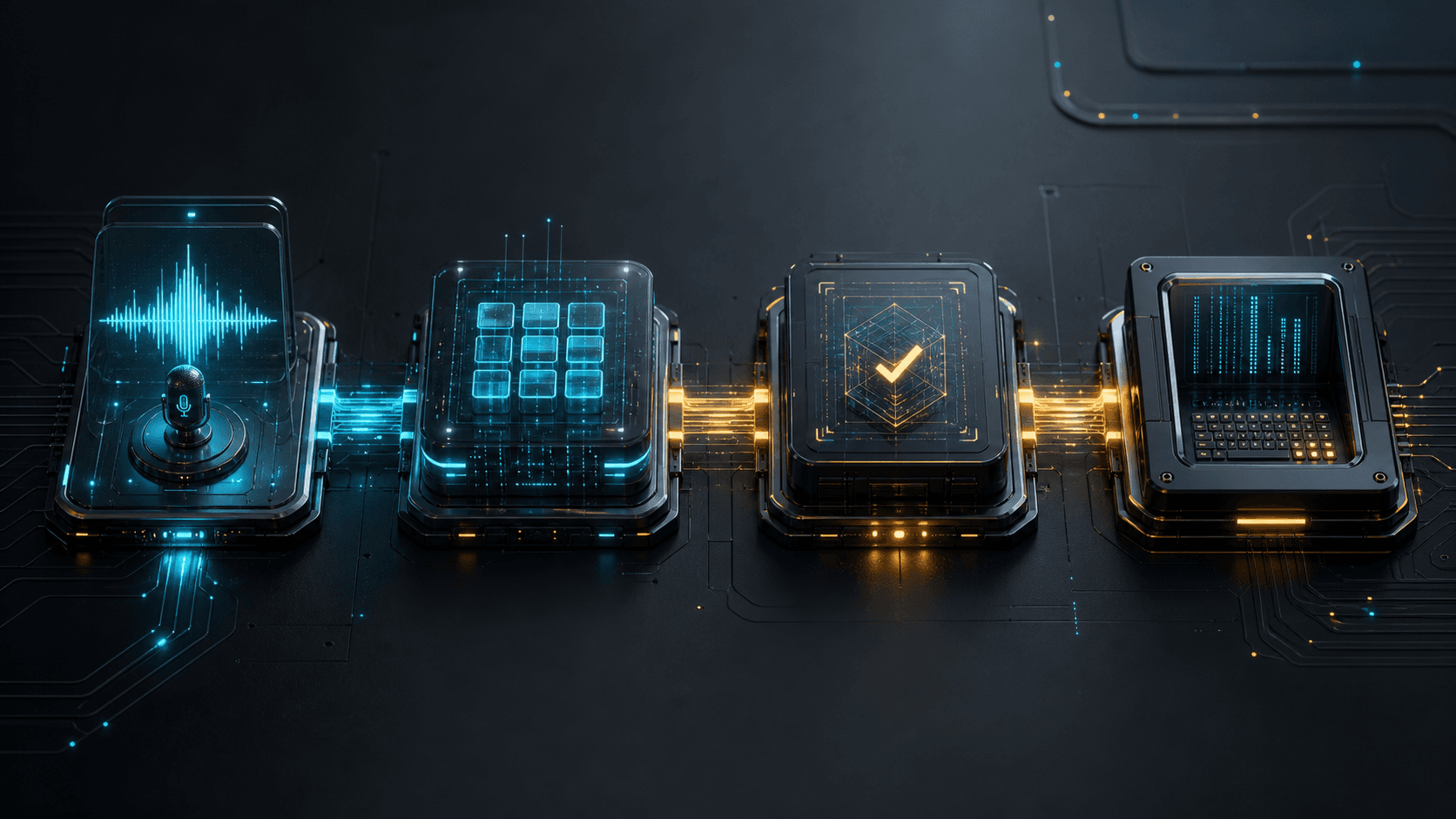
The real problem is not one feature
Most AI developer tools are sold as isolated wins. One tool makes prompts faster. Another stores notes. Another runs commands. Another claims to evaluate output. Each feature can look useful on its own, but the working day does not happen in isolated boxes. Developers move from capture to context to verification to execution in one continuous loop.
That is why the Agent Software Suite exists. It is not an umbrella brand invented after the fact. It is a practical response to the way AI-assisted development actually fails when the workflow is fragmented.
Four products, one working loop
The suite is built around four jobs:
- Agent Wispr captures input quickly without routing audio through a cloud dictation layer.
- Agent Brain keeps shared memory, recall, and semantic context available across tools.
- Agent Harness turns agent behavior into something that can be replayed and tested.
- Agent Terminal gives execution a workspace where the human can still inspect and override.
Each product needs to stand on its own. That matters commercially and technically. At the same time, the products become more useful when they fit together as one system instead of pretending one app can solve every part of the problem.
Why local-first matters here
Local-first is not aesthetic branding. It changes the operating characteristics of the workflow. Keeping more of the stack local improves privacy, shortens the loop between action and feedback, and reduces how many external services have to stay perfectly aligned before useful work can happen.
That does not mean every model decision must be fully local forever. It means the system should default toward local control, local context, and local inspectability wherever that is practical. For developers, that posture is often the difference between a tool they can operationalize and a demo they cannot trust.
Why not build one monolith
A monolithic agent product sounds cleaner until the product has to survive real team constraints. Different teams adopt different parts of the workflow at different speeds. Some care first about private voice capture. Others care first about memory. Others will not trust any workflow until evaluation exists.
Modularity is not a compromise. It is how the suite stays usable for teams that want one capability now without being forced into a full platform migration on day one.
The operating principle
The suite should make AI-assisted development more coherent, not more magical. That means fewer hidden assumptions, fewer black boxes, and more explicit boundaries between capture, memory, evaluation, and execution.
If the products do that consistently, the suite earns the right to exist. If they do not, then the suite is just packaging.