Lip-sync vs photo animation: two pipelines, two use cases
Video-driven lip-sync and photo-driven face animation solve different problems for talking-head content — here's how Agent Avatar's pipeline uses each.
By Agent Software
Two different starting points, two different techniques
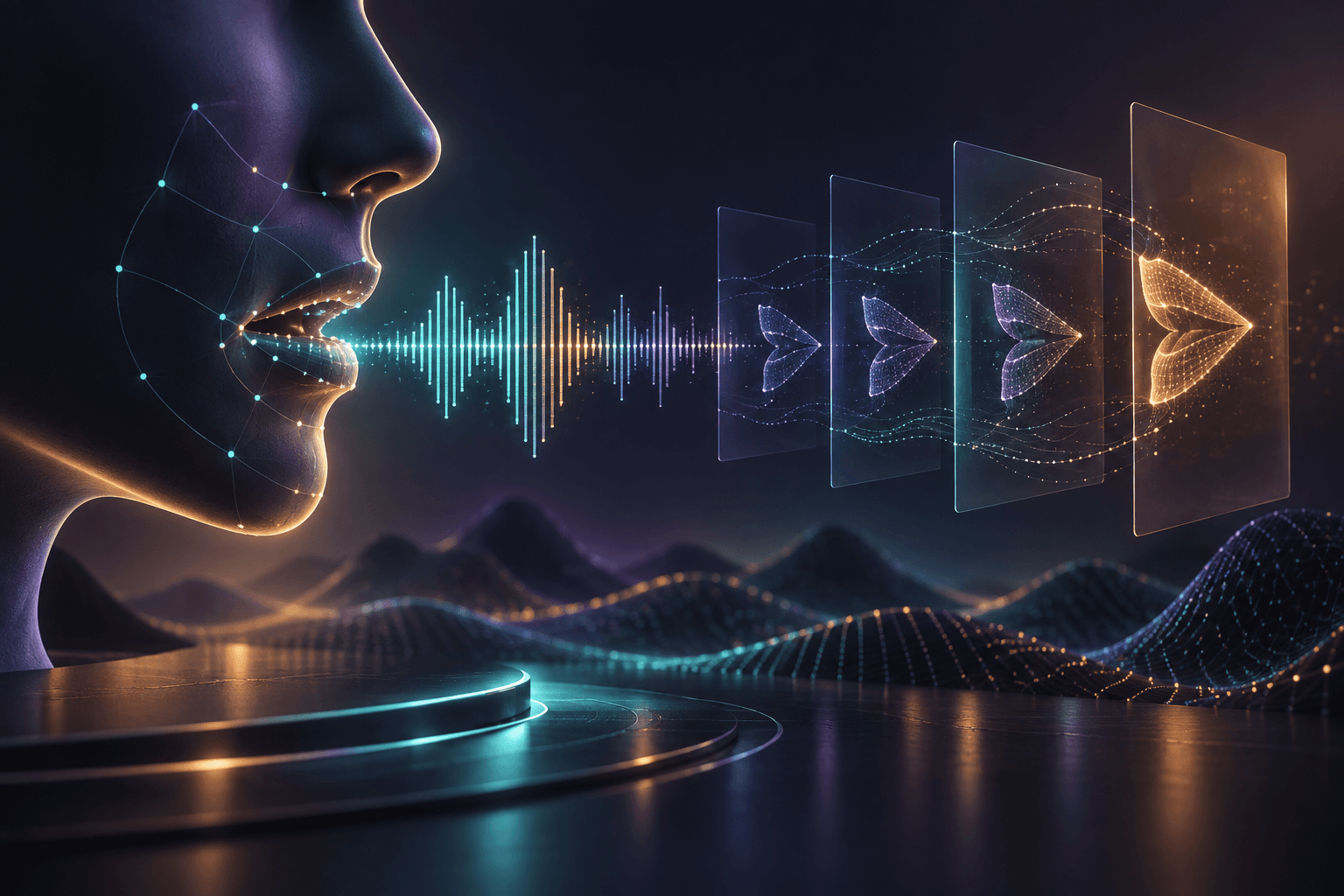
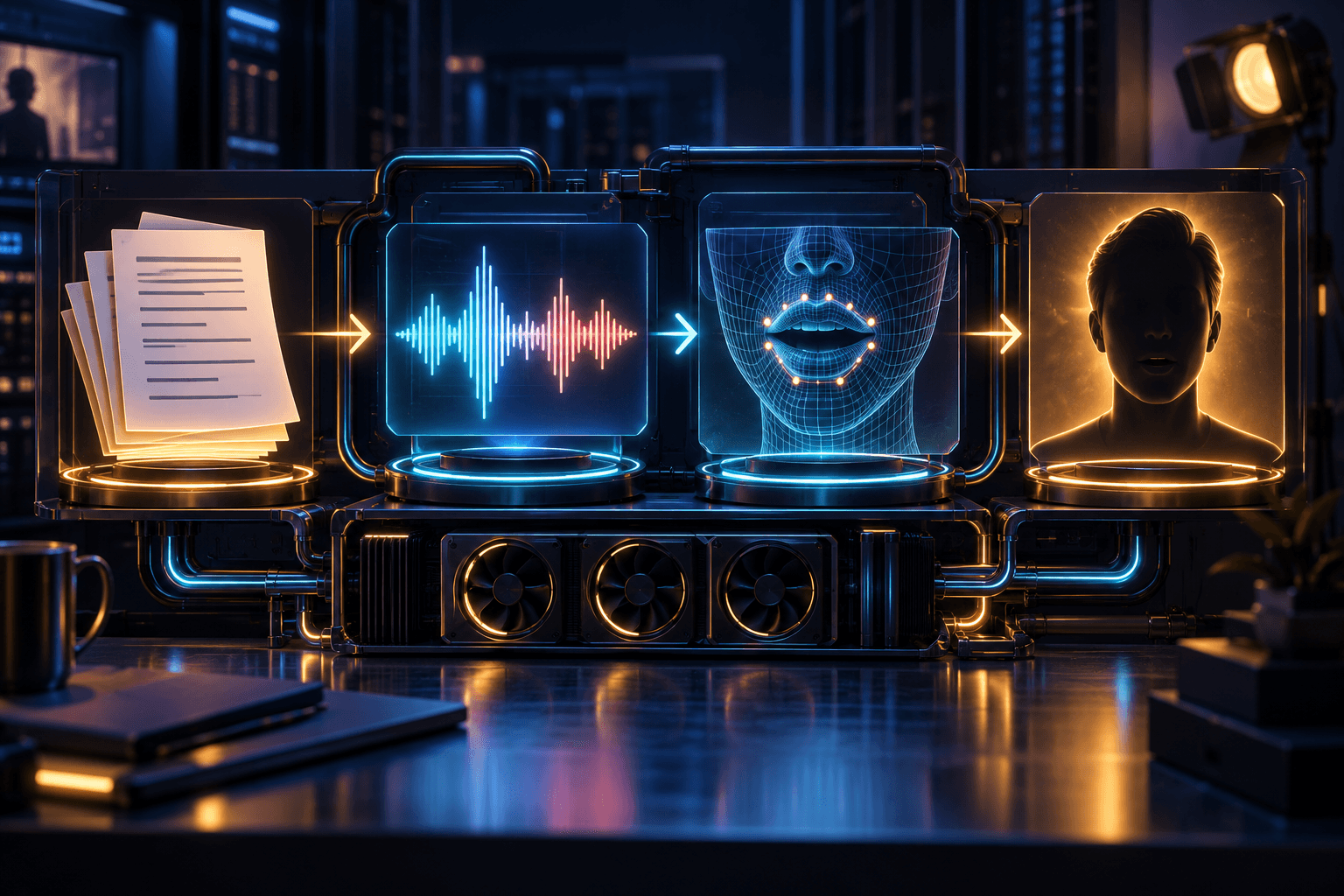
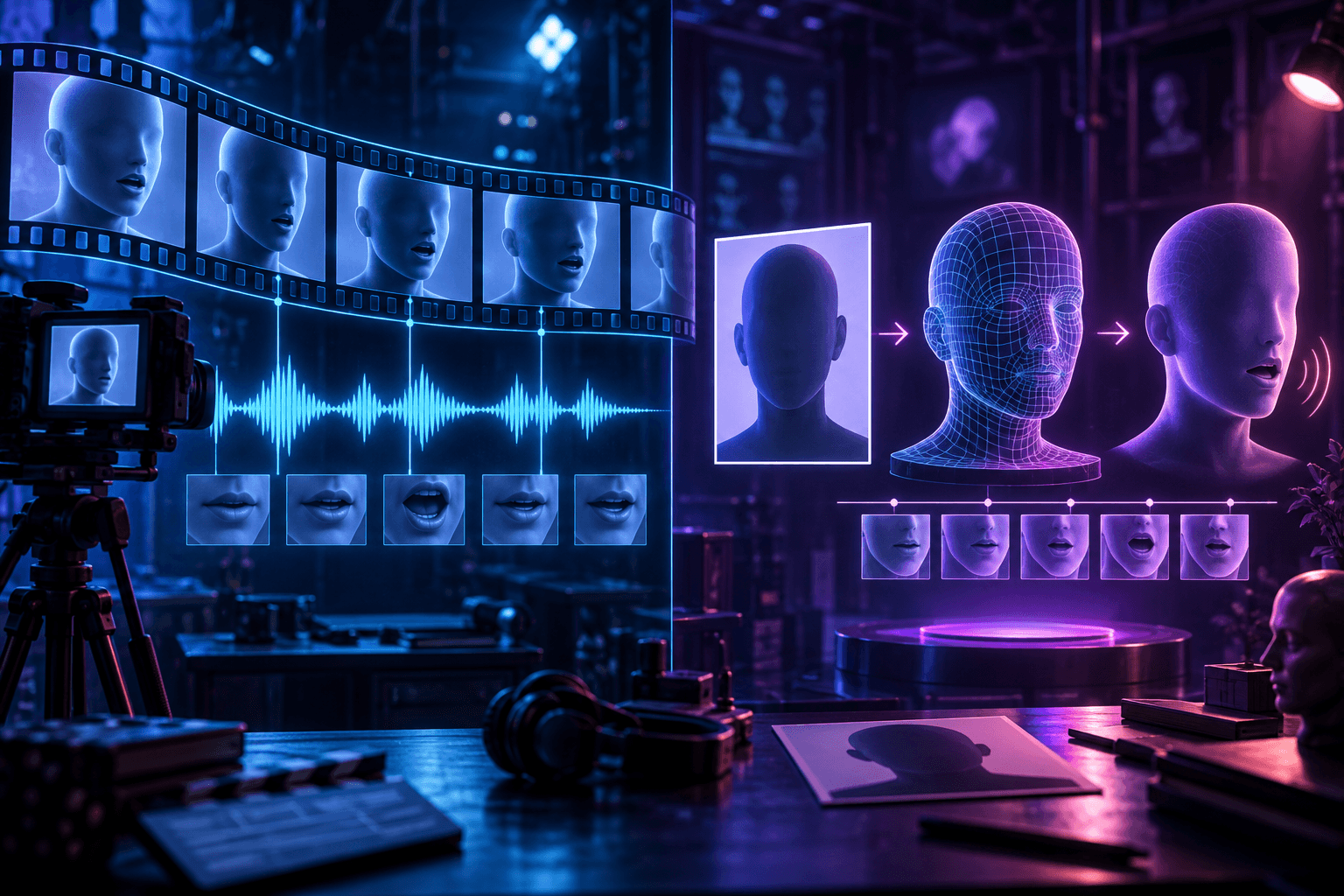
"Making a talking head video" sounds like one problem, but the starting material determines the actual technique needed. Existing video footage of someone talking calls for lip-sync — replacing or aligning mouth movement to new audio while preserving everything else about the original footage. A single still photo has no motion to align to, so it needs full animation generated from scratch.
Video-driven lip-sync
When the source is real footage, the goal is to keep as much of the original as possible — the person's natural head movement, lighting, background — and adjust only the mouth region to match new speech. Done well, this preserves the authenticity of real recorded footage while allowing new dialogue.
Photo-driven animation
When there's no video, only a still image, the pipeline has to generate motion where none existed — reconstructing a 3D-aware model of the face and animating it to match speech. This makes an entirely new talking head possible from a single photo, which video-driven lip-sync can't do.
The honest limitation worth naming
Photo-driven animation has a known weak point: because it relies on a 3D mesh reconstruction rather than real recorded motion, wide-open vowel shapes (the mouth positions in sounds like "ah" or "oh") can distort or look less natural than a lip-synced video source would. That's not a hidden flaw — it's a real, current limitation of generating motion from a single static image.
Choosing the right pipeline for the job
The practical takeaway is that neither technique is universally better — they solve different inputs. Real footage of a presenter calls for lip-sync. A photo with no available video calls for animation, accepting its current limitations on certain sounds. Matching pipeline to source material is most of what makes the output convincing.
Where this stands today
This pipeline exists and has been tested internally as part of Agent Avatar's development. Agent Avatar itself remains an internal project without a public signup flow — this post describes how the underlying techniques work, not an announcement that the product is available.