100% local voice transcription: why your audio never leaves your machine
Agent Wispr transcribes everything on-device by default — no audio upload, no cloud dependency for the core dictation workflow.
By Agent Software
Dictation shouldn't require trust in a third party
Voice input tools have an obvious privacy question built in: where does the audio go? For a developer dictating prompts, notes, or commit messages into a coding workflow, that audio can contain proprietary code references, internal project names, or unreleased plans.
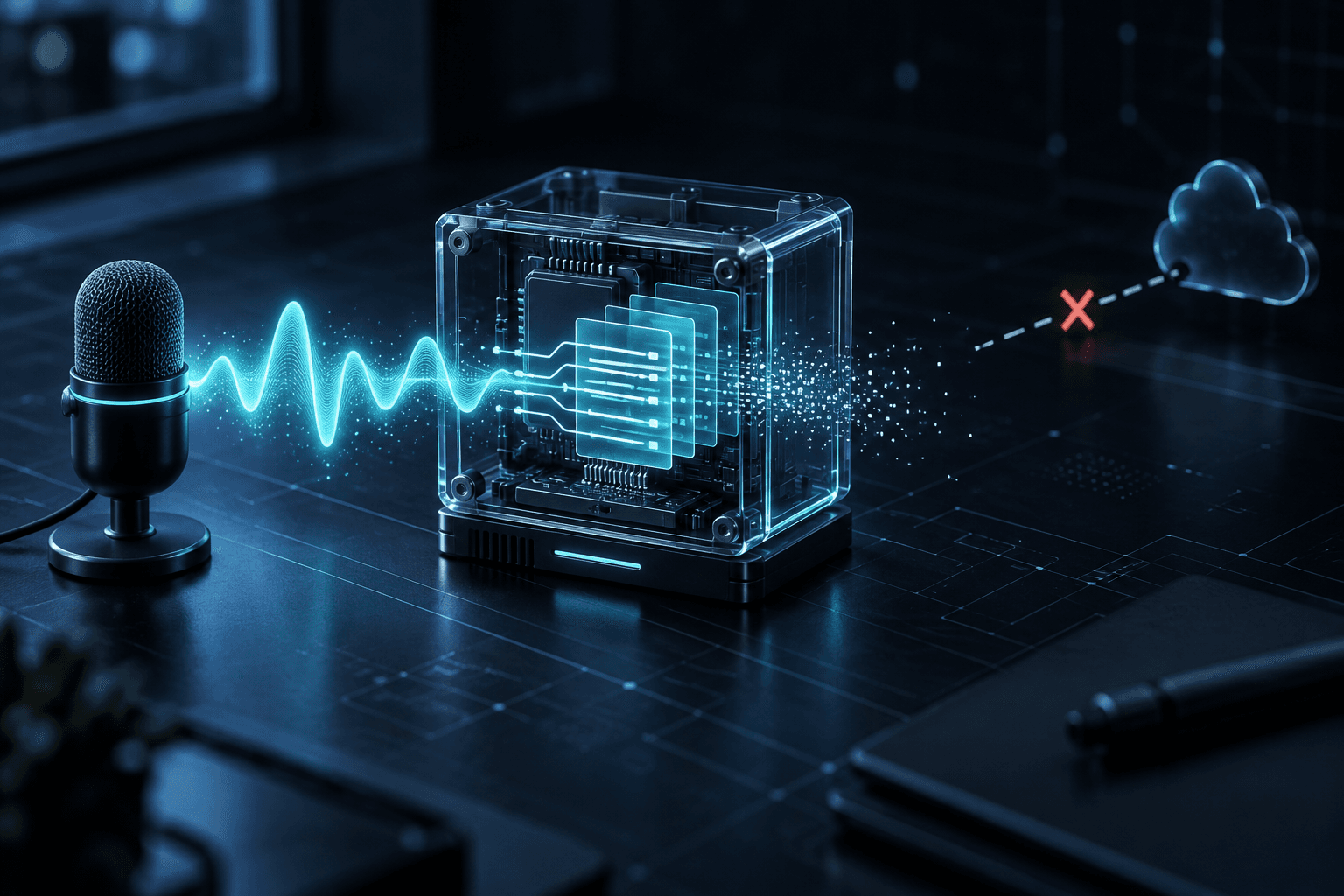
Agent Wispr's answer is that the core transcription step never needs to leave the machine. Audio comes in, gets transcribed locally, and gets discarded from memory immediately afterward — there's no persistent recording and no required network call for the transcription itself to complete.
What "local" actually means here
This isn't a privacy mode you have to opt into. It's the default behavior of the transcription model, which runs locally using models sized to the hardware available — from a smaller model on modest hardware up to a larger one when a local GPU is available for faster processing.
The one deliberate exception
Agent Wispr does offer an optional AI cleanup pass — a fast pass that strips filler words like "umm" and tightens grammar using a cloud-hosted model. That's the one part of the pipeline that requires network access, and it's opt-in. The product draws a clear line: transcription never needs the cloud, cleanup optionally can use it.
Where this fits into a coding workflow
Dictating directly into a terminal or an AI coding assistant means speaking a request instead of typing it, then letting Agent Wispr inject the transcribed text wherever the cursor is focused. Because the transcription step is instant and local, that workflow doesn't introduce the latency or privacy exposure of a round trip to a cloud transcription API.
The tradeoff worth naming
Running transcription locally means the quality and speed depend partly on your own hardware — a larger model on a capable GPU will transcribe faster and more accurately than a small model on a laptop CPU. That's a real tradeoff against a cloud service that always runs on someone else's high-end infrastructure. For teams and individuals who'd rather keep that audio local regardless, it's the right tradeoff to make available.